
Our story.
Feed your skin the way you'd feed your body
Soft n’ fat didn't start as a business. It started as a refusal, a decision, over and over, to not put something on our skin or our kids' skin that we couldn't explain, source, or trust. Fourteen years and five kids later, that refusal has turned into a working farm, a wildcrafting practice, and a small herd of very opinionated animals who all, one way or another, end up on our ingredient list.
Here's the long version.
Before the brand, there was a kitchen.
When my eldest son was born, almost fourteen years ago now, I read the ingredient panel on his baby lotion and couldn't make sense of most of it. I'd already left synthetic skincare behind for myself strictly using Dr. Bronner's and whatever I managed to make with my own hands. But a newborn made the question sharper. From contemplating what I was willing to put on skin this fresh and new, to wondering how I would handle treating the ailments that we would inevitably encounter throughout his childhood.
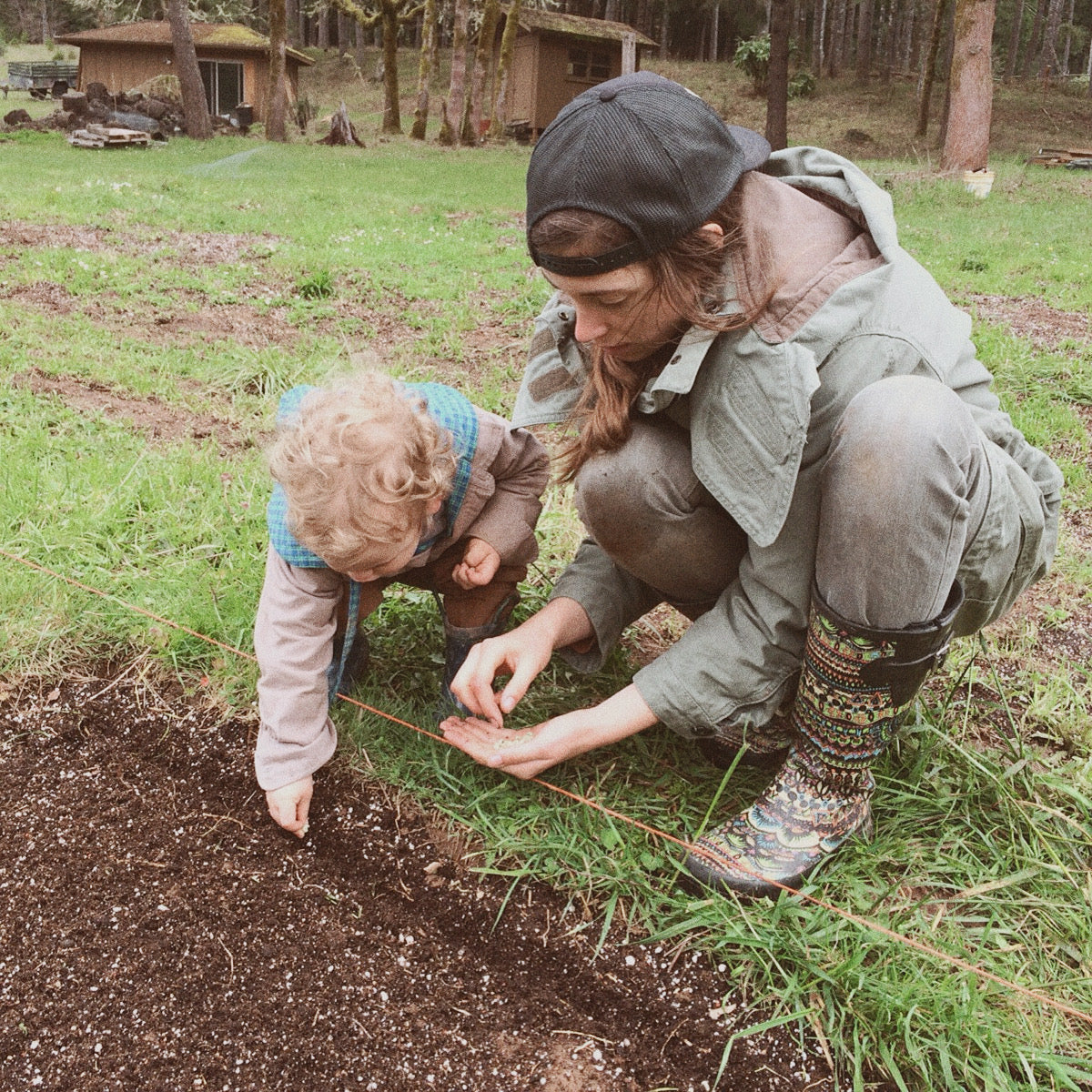
These questions sent me deep into the study of folk herbalism as a way of finding a holistic answer. The year that I became a mother, I taught myself to grow food and the herbs I was working with. I had not a bit of experience in either, just a baby on my hip and a need to understand firsthand what I was nourishing him with, inside and out.
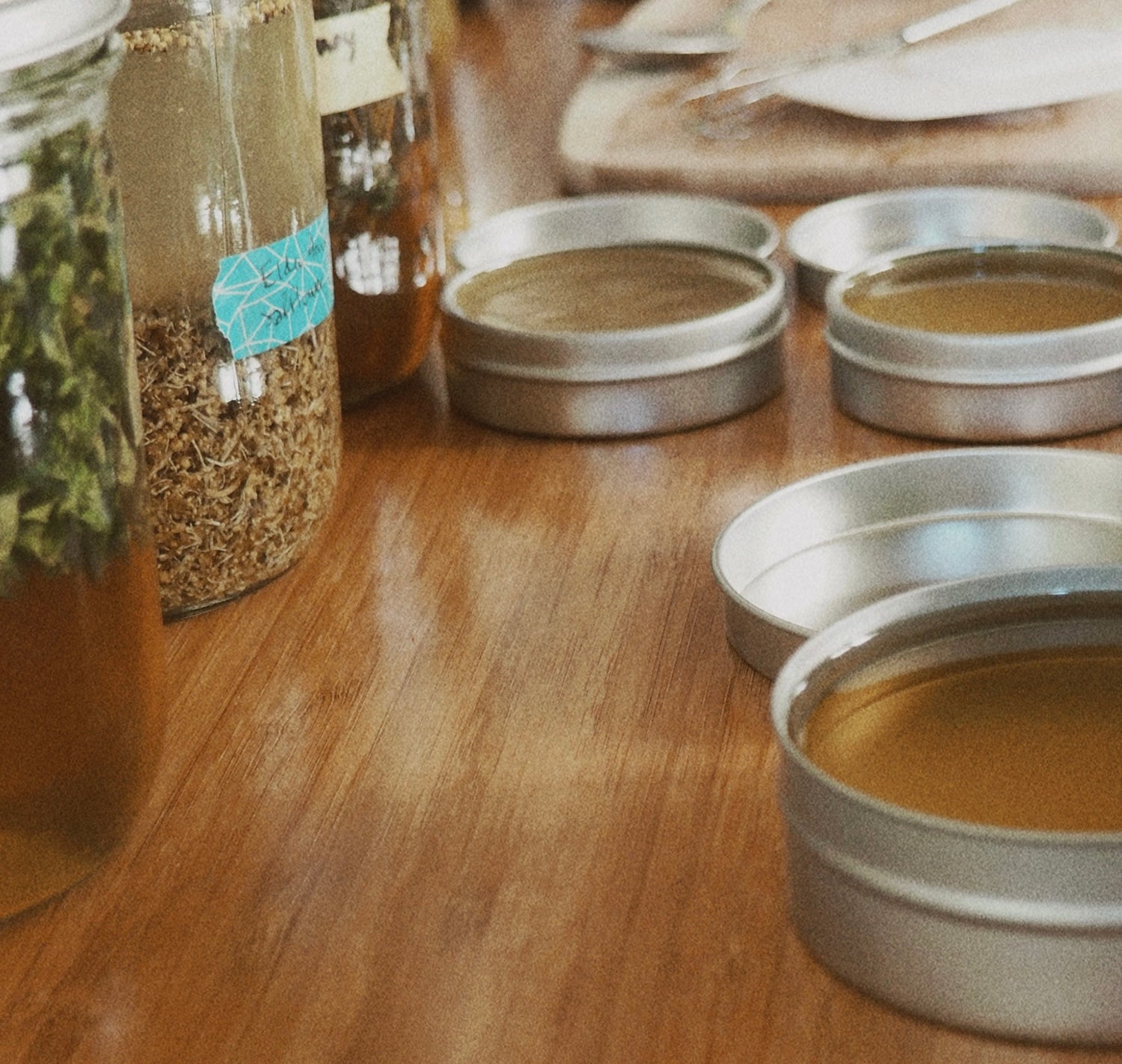
For years, everything I made stayed inside our own four walls, gifts for friends, jars for family, nothing more ambitious than that. I was trying to understand plants: how to grow them, how to work with them, what they actually did for skin versus what a label claimed they did.
It was around this time I was gifted my first jar of tallow, which led to many trials of rendering the fat of just about any fat I could get my hands on.
That kind of knowledge doesn't come from a course. It comes from years of getting your hands dirty and paying attention.
The more I worked with the land, the more I read and observed, worked with different fats, the more I found myself pulled toward regenerative agriculture.
Understanding what benefits the skin turned into understanding what belongs in soil, and once you start pulling that thread, it's hard to stop. With each of our five kids, the question of what we were building for them got bigger than skincare & herbal tonics. It became about the land itself.
In 2022, a mentor gave us the push we needed: build the business that can support the farm, before you try to build the farm.That’s when it all started to come together. My years of fiddling around making products, studying herbalism and experimenting with fats all made sense.
It was then that soft n’ fat was born, a decade of quiet learning, finally offered beyond our own kitchen table. A year later, the farm followed: seven acres we'd come to call Fat of the Valley.

Fat of the Valley: seven acres, reclaimed.
The land we found wasn't a blank canvas. It had sat abandoned for years, swallowed by blackberry bramble and hawthorn thickets so thick in places you couldn't walk ten feet without a machete. What you see in our photos, open pasture, a working garden, room for animals to actually move, it didn't exist when we arrived. We made it, with the help of our animals, acre by acre. The reality is that we never be finished, rather, we think of it as land that gets a little more alive every season.
A few things that guide how we work to transform this land and build our soil:
Rotational grazing. Our animals move in cycles across the land instead of parking in one spot until it's stripped. Every section gets used, then gets to rest and rebuild.
No-till, cover-cropped ground. We disturb the soil as little as possible. Cover crops hold the ground and feed it between plantings.
Composting, always. Nothing here is waste. What comes off the land goes back into building the next season's soil.

The animals, and what they give us
Our chickens free range on pasture and are the source of the pastured egg oil in products like SKIN FOOD. Our milk goats are part of the daily rhythm here, morning and evening, rain or shine. The pigs are, unexpectedly, our most effective land-reclamation crew: turned loose on overgrown bramble, they root it out and turn it into soil worth planting in. We brought home our first emu this year, with plans to grow our own flock over time, but for now, our emu oil comes from a trusted outside source, but raising our own is very much part of where this farm is headed.
Turkeys and ducks round out the flock, and our sheep currently fill the grazing role we'd eventually love cattle to fill, once we have the acreage to support them.
Keeping watch over all of it: a Great Pyrenees and a Catahoula, who've appointed themselves full time guardians of seven acres and everything on it.

What grows here.
Beyond the animals, we tend an antique rose garden — old, intensely fragrant varieties that have mostly fallen out of commercial cultivation — alongside a large herb garden and a small kitchen garden, feeding directly into the infusions and hydrosols throughout the shop. Where we can, we wildcraft rather than cultivate, foraging herbs from the land around us because wild-grown plants tend to develop a potency a cultivated version rarely matches.

The family behind it all.
It's me, my hunk of a man, and our five kids — 13, 10, 6, 3, and 1 — underfoot through all of it: rendering tallow, distilling hydrosols, and chasing goats out of the rose beds more often than we'd like. It's loud. It's a lot. It's also precisely the life we set out to build.
We dream of more acreage, our own cattle, more bramble turned back into pasture. For now, anything we can't grow or raise ourselves comes directly from other small farmers we trust, and from reputable, transparent suppliers for the rest.